
In April 2024 we had a chance to visit the island of Torcello near Venice to admire its history both natural and man-made. On our visit to this quiet rural island we had a wonderful time watching the birds, lizards and insects as they hunted their food while we munched on freshly caught seafood and basked in the spring sunshine.

This wall lizard, which is quite small, enjoyed the warm sunshine.
Where to Look for Birds on Torcello near Venice
Most of the rural island of Torcello is privately owned land so our birding was done only from the public pathways. If you have the opportunity to book in advance, there is a private property that includes a large marshland which is notable for its bird life. Unfortunately, this was not an option for us.
We looked for birds immediately after disembarking from the ferry from Venice and with patience and binoculars were able to find quite a few. Further along the public path to the church. we found a footpath being used by others that allowed a glimpse of a mudflat partially exposed by the lowering tide.

We stopped for lunch at an outdoor patio adjoining a meadow with small trees and shrubs where many butterflies were fun to watch but difficult to photograph.I managed to get some fuzzy photos of the very large European Rose Chafers that were visiting the blossoming trees. (I remembered a Gerald Durrell book about his childhood in Corfu, and wondered if these were Rose Chafers that the Rose Beetle Man sold (alive) flying on threads. They are related!)
After crossing the bridge, we were able to look into a small orchard. And all along the main footpath. there were birds to spot in the trees.
Add on our visit to see the lovely mosaics in the church and it was a great day!
Shorebirds on Torcello
Because the tide was fairly low when we were on the island, we were able to spot some birds hunting along the edges of the shore even from the few public paths.
This Eurasian Oystercatcher looked enough like the ones I saw in British Columbia that I felt confident it was a type of oystercatcher.

I was much less certain about this Curlew. There are many shorebirds that do not migrate near where I visit and I’m not sure how many of them have downward curving bills.

When I posted a photo on iNaturalist, however, more experienced bird fans named it as a Eurasian Curlew. Having never seen a wild Curlew of any type before. I was quite pleased.
These next photos are of a bird on the shore but are not technically photos of a shorebird.

This Little Egret stalked out from behind some vegetation.

It caught a snack and then stalked away again. In the photo I can see that it had some wispy plumes for breeding season. At the time, it was hard to see against the glare and I didn’t really notice.
Birds of Torcello That I Have Also Seen in Canada
Some of the birds we saw on the island were easy to recognize.
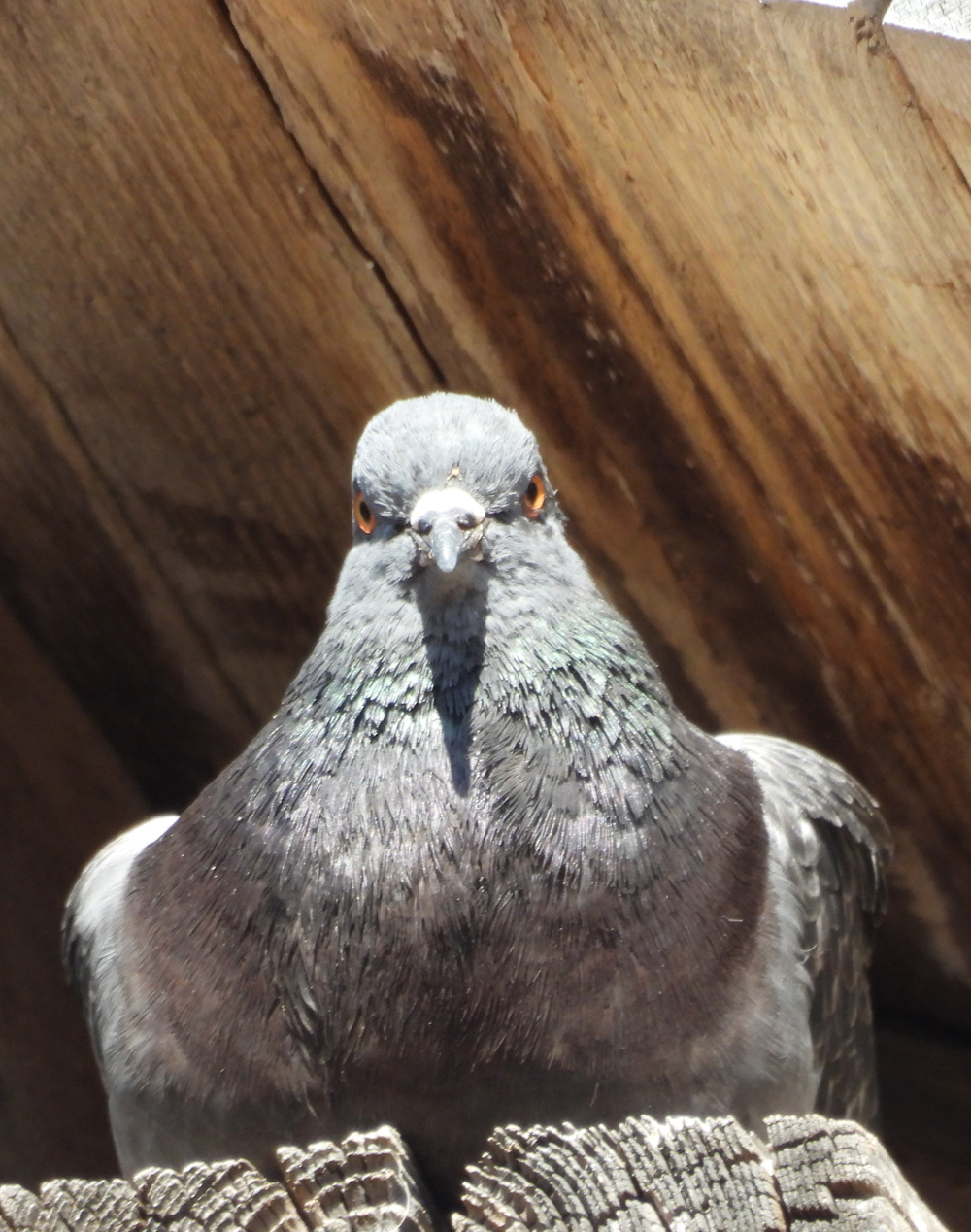
This bird glaring balefully at me is a Rock Pigeon we met in Venice. We saw other pigeons in flight.
There were several Mallard ducks in the water at Torcello. I don’t know if they were wild or farm ducks but they looked like our normal wild Mallards.

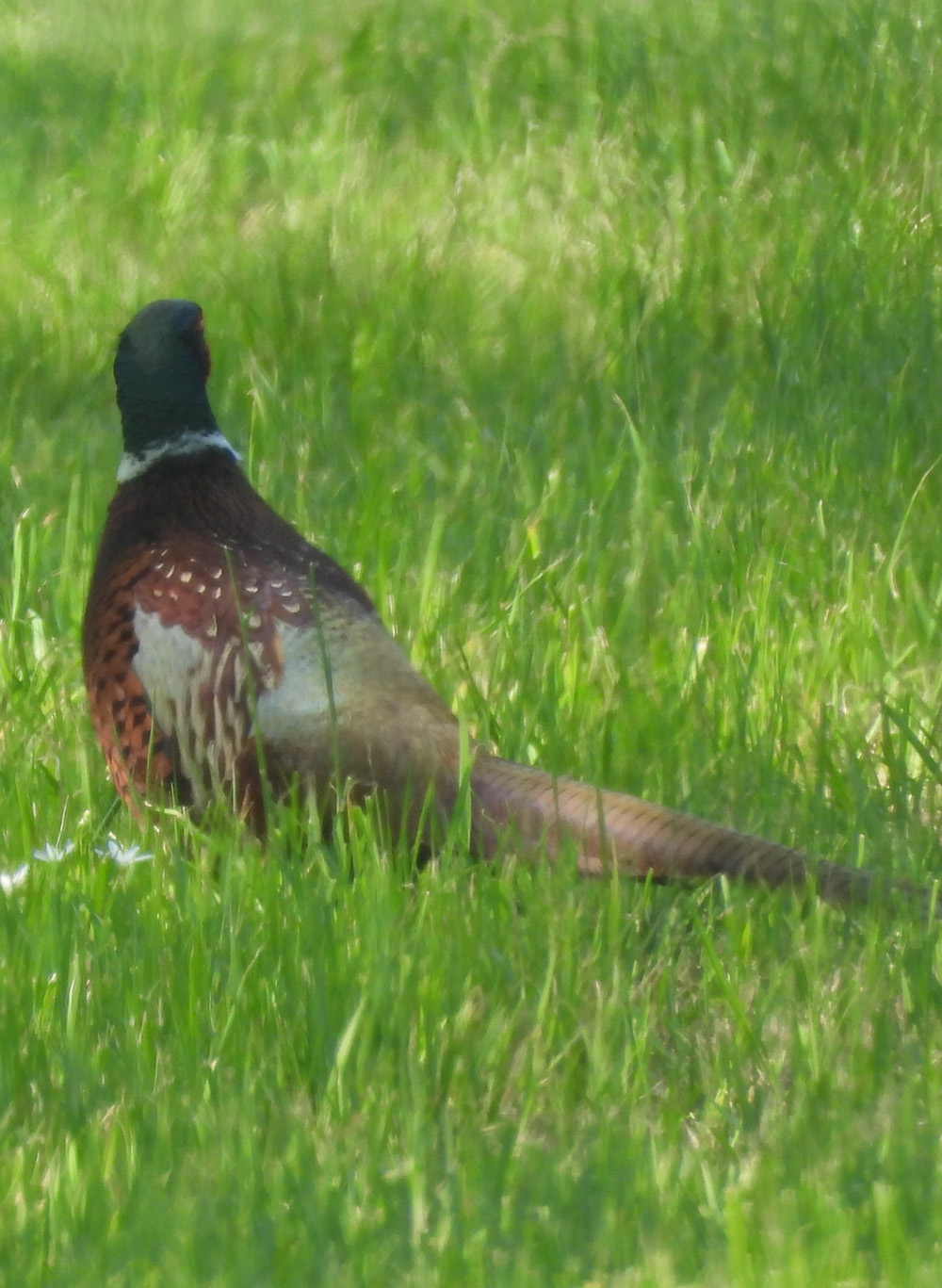
We watched some distant birds feeding under the trees in an orchard. Eventually, we decided this one is a Ring-necked Pheasant. We saw a male in another field later. Again. they could easily be farm birds; I’m not sure.
Another Orchard Bird on Torcello

There were several of these birds in the orchard. They looked like a very chunky Dove or a very elongated pigeon. It turns out they are Common Wood-Pigeons. a bird we met again in the gardens of Florence. They are quite bulky.
Years of Watching Nature on TV Helped ID Birds on Torcello
When the ferry docked. we let the others lead the way across the island via the public footpath. We stayed at the dock to enjoy the quiet and look for wildlife.

When I saw the odd bill knob and the vivid colouring. I thought “I think this is a Shelduck like on Nature!” Sure enough, the ducks loafing on the shore opposite the ferry wharf were Common Shelducks. We saw a dozen more resting on the mudflat near the Curlew.

Birding from the Ferry to Torcello in Venice
I don’t have any photos to share but we did look for birds while on the ferry to Torcello. And I’m glad we did, because we had (distant) views of large mostly white birds — Greater Flamingos! At first glance, I thought they looked like the Mute Swans at home because of their size and colour, but as we passed closer I could see there were dozens of birds and the ones which were feeding and standing were easier to identify.
We also saw Yellow-legged Gulls, Black-headed Gulls and Mediterranean Gulls.
A Butterfly in Burano
Well, to be honest it was in Murano that we saw this Comma but I love alliteration for titles.

I was surprised to see this Southern Comma dance along and land on a sun-warmed wall in Murano. It stayed still just long enough for a quick photo of the undersides of the wings.
We had a great trip and I would be happy to visit Torcello again!