
Well, forest is a bit of a stretch. Most of these small yellow birds prefer a mixture of trees, bushes and open spaces. You’re most likely to meet them along the edges of a forest or park. There are other yellow birds in Ontario. These are just some of the most commonly seen ones.
American Goldfinches Often Over-winter in Southern Ontario
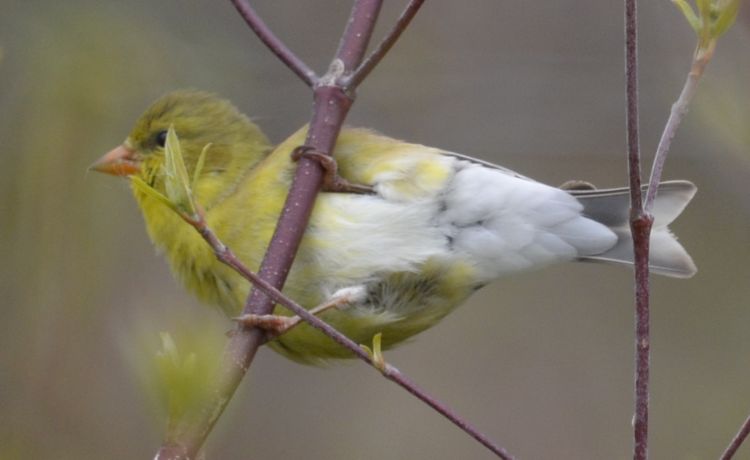
The short thick orange bill on this female American Goldfinch is a good field mark.
One familiar yellow bird is the male American Goldfinch. In late spring and summer, he sports shiny black wings and a small black cap.
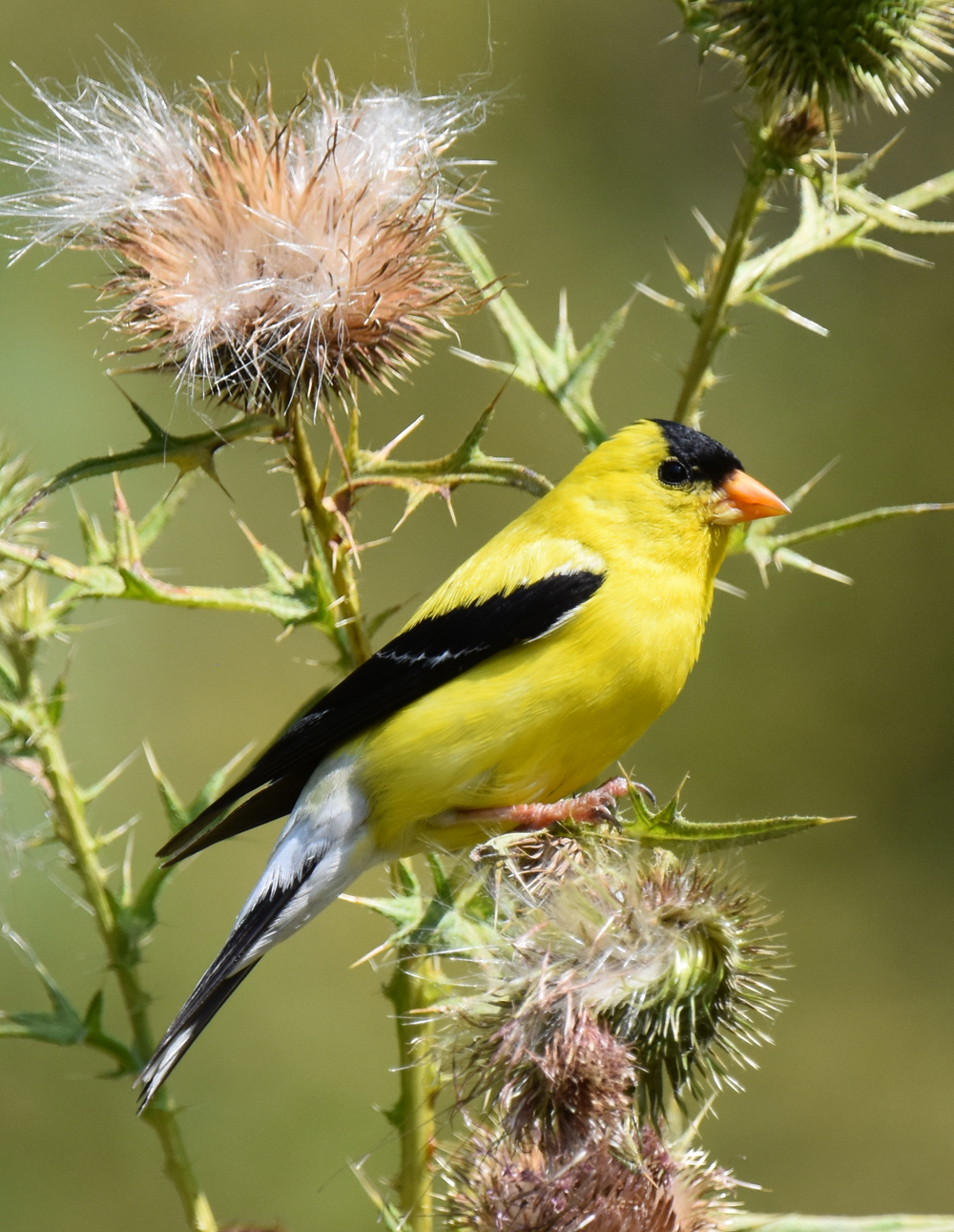
His back and head are chrome yellow and can catch the sun from a surprisingly long way off. Female American Goldfinches are also yellow in the breeding season, but have much more green to their colouring. Their wings are darker but they don’t have a black cap. In the off season, Goldfinches fade to a greyish-green with patches of yellow depending on the stage of their moult.

Goldfinches like nyjer seed, which is a type of thistle seed, and are frequent winter visitors to bird feeders offering it. They will also perch precariously to eat seeds from dead stalks of Black-eyed Susans, Shasta daisies, Asters and Goldenrod. If you grow any of these in your garden, consider leaving a few stalks in place for the winter for the birds to feed from.
Yellow Warblers are Aptly Named
In late spring, usually late April or May, Yellow Warblers flock back to southern Ontario from their holidays to the south. As they zip around with enviable exuberance it can be hard to spot their field marks. If one calms down enough to perch, look first at the wings and head. No black cap and greenish not black wings means it’s not a male Goldfinch. Warblers also have a different shape of bill: it is narrower and longer than a Goldfinch’s beak.
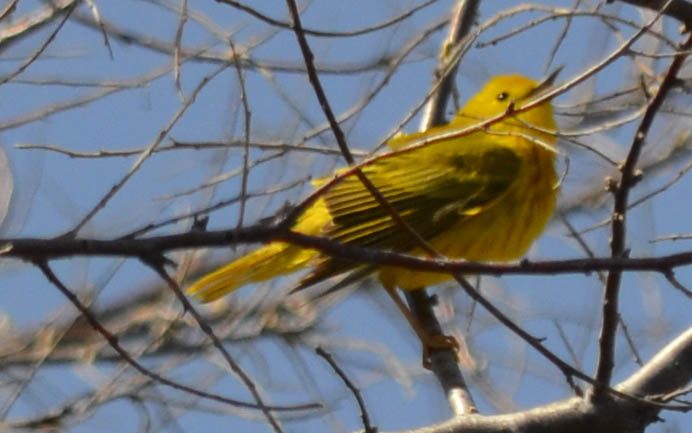
If you’re looking at a male Yellow Warbler, it should have rusty red dash marks running vertically along its upper chest and sides.
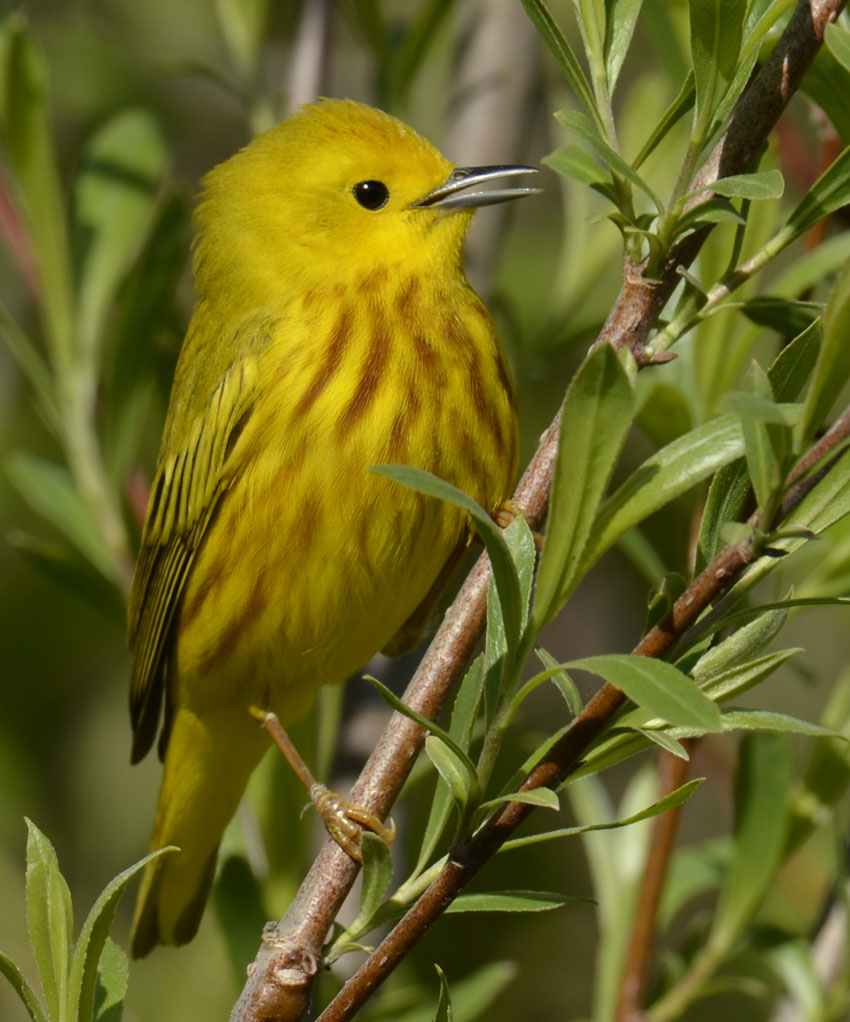
Female Yellow Warblers are basically yellow all over with greenish wings. They don’t have the red marks or any black marks. Because the female’s yellow face is so plain, her black eyes show up quite clearly.
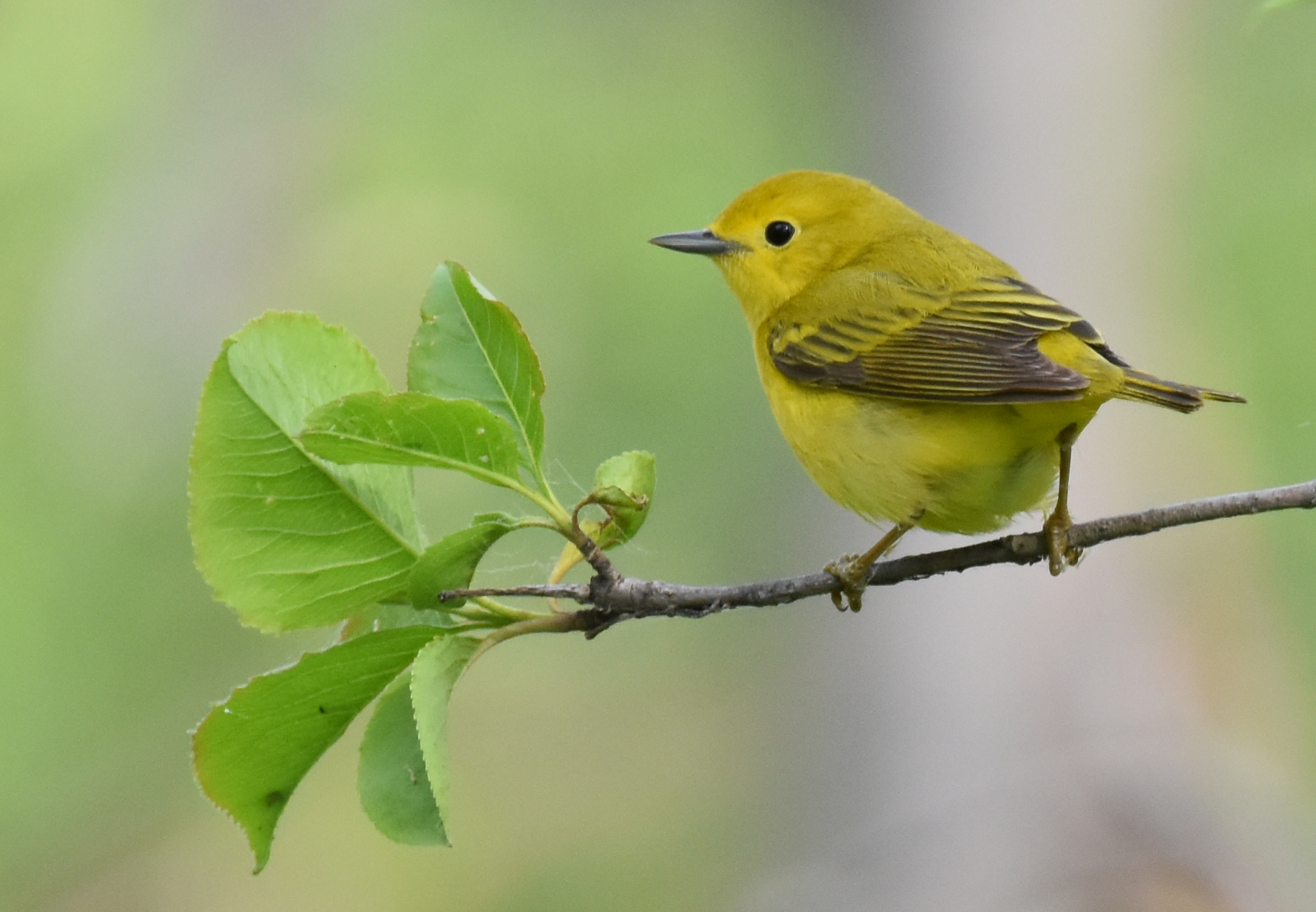
List most warblers, Yellows like to eat insects. They particularly like to hunt in thickets of low bushes and small trees. If you keep seeing a bright yellow bird in a thicket and can never get a really clear look, there’s a good chance it’s a Yellow Warbler.
Magnolia Warblers are Only Yellow on the Front
Another warbler that will catch your eye with its yellow is a Magnolia Warbler. (Apparently so named because the first one was shot dead out of a magnolia tree!)
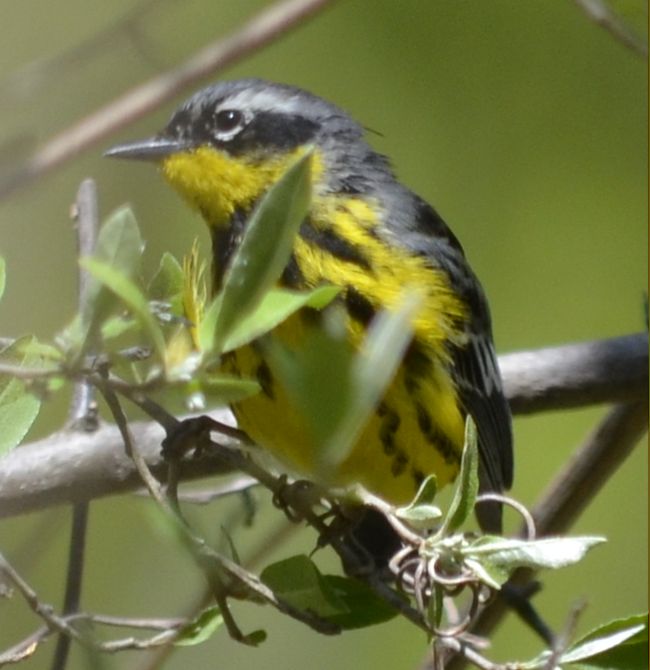
The male Magnolia is chrome yellow underneath: it’s throat, chest, belly and under the tail area are all yellow. Its back, however, is greyish black with a white patch on the wing and an obvious white eyebrow and a black mask. Instead of red streaks on the breast, it has strong black lines, often two of them, running vertically down each side of the chest.
Female Magnolias have a yellow throat, chest and abdomen, without the strong black markings. Their backs are a light grey and they don’t have the white eyebrow.
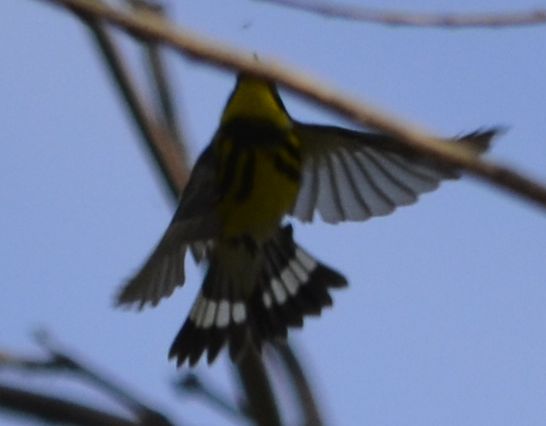
As I discovered when it spread its tail to land, male Magnolias also have a wide white band across their tail. According to a website providing information for bird banders, this band can be used to help determine information about the age and sex of the warbler.
Magnolias forage for insects often in lower branches and even near the ground. It catches many insects on the undersides of leaves and needles.
In fall, younger Magnolia Warblers can have a pale grey necklace as shown in another page.
Other Little Yellow Birds
Of course this is just an introduction to the little yellow birds of southern Ontario. There are others out there you might meet, including
- Canada Warblers
- Cape May Warblers
- Nashville Warblers
- Pine Warblers
- Wilson’s Warblers
- Yellow-rumped Warblers
Ok let’s admit it, many warblers have yellow markings!
Some vireos and flycatchers also have yellow marks.
When in doubt, a good field guide, like Peterson’s or Sibley’s is your best resource.
Related Reading
Join In
Have you been watching warblers this weekend? Please share your experiences with a comment.