
This June a close family member was fortunate enough to encounter a Luna Moth just as it hatched out from its winter-worn cocoon. Its wings were still perfect: the colours vivid, no scales missing, no tatters or breaks in its wings. He took these photos which I am sharing with you.
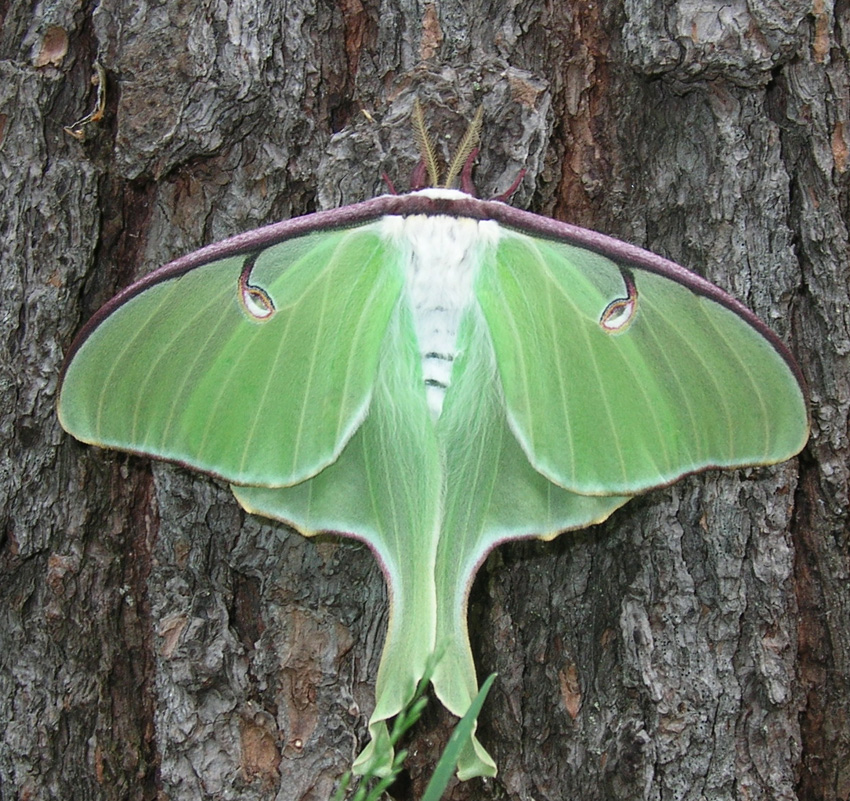
The Velvet-Winged Night Moths of June
When I see Luna Moths, or even their photos, I remember a book my Great-Aunt recommended to me which fortunately came back into print briefly in the 1980s. While not every sentiment in it would meet with approval from today’s readers, when the story describes the wonders of the natural world, it captures some of the magic on paper.
“What is the miracle of June? What one thing epitomizes the whole month?…It’s June when these great, velvet-winged night moths sweep its moonlit skies, consummating their scheme of creation, and dropping like a bloomed-out flower.” paraphrased from A Girl of the Limberlost by Gene Stratton Porter, 1909.
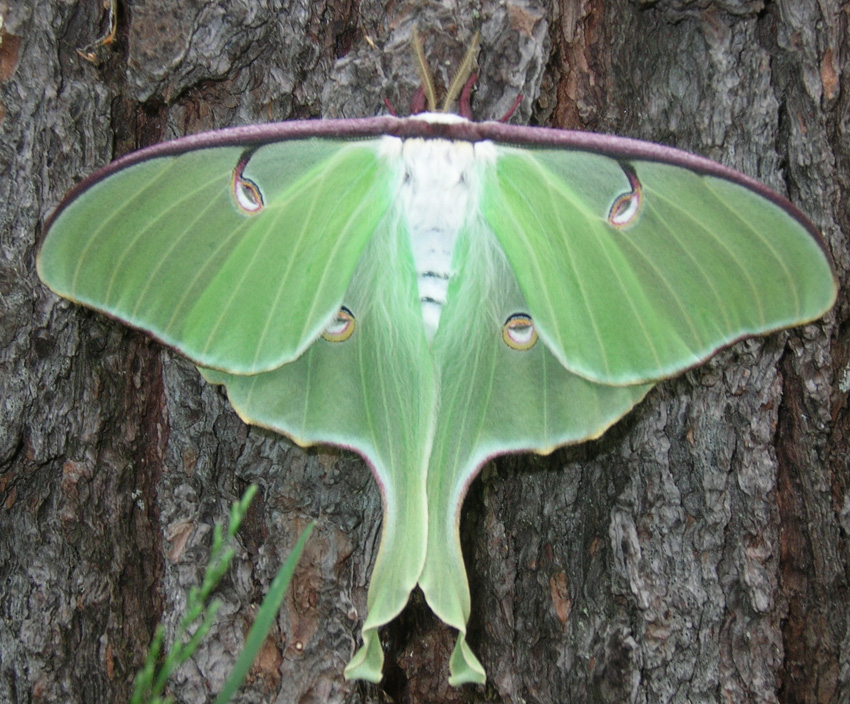
Here you can see the “eyes” on the hind wings.
What Do Luna Moths Eat?
The moths themselves don’t eat. According to some sources, they don’t even have mouths.
The caterpillars, however, grow large on various trees and shrubs. They aren’t particularly fussy. Some of these include
- birch
- hickory
- walnut and
- winged sumac.
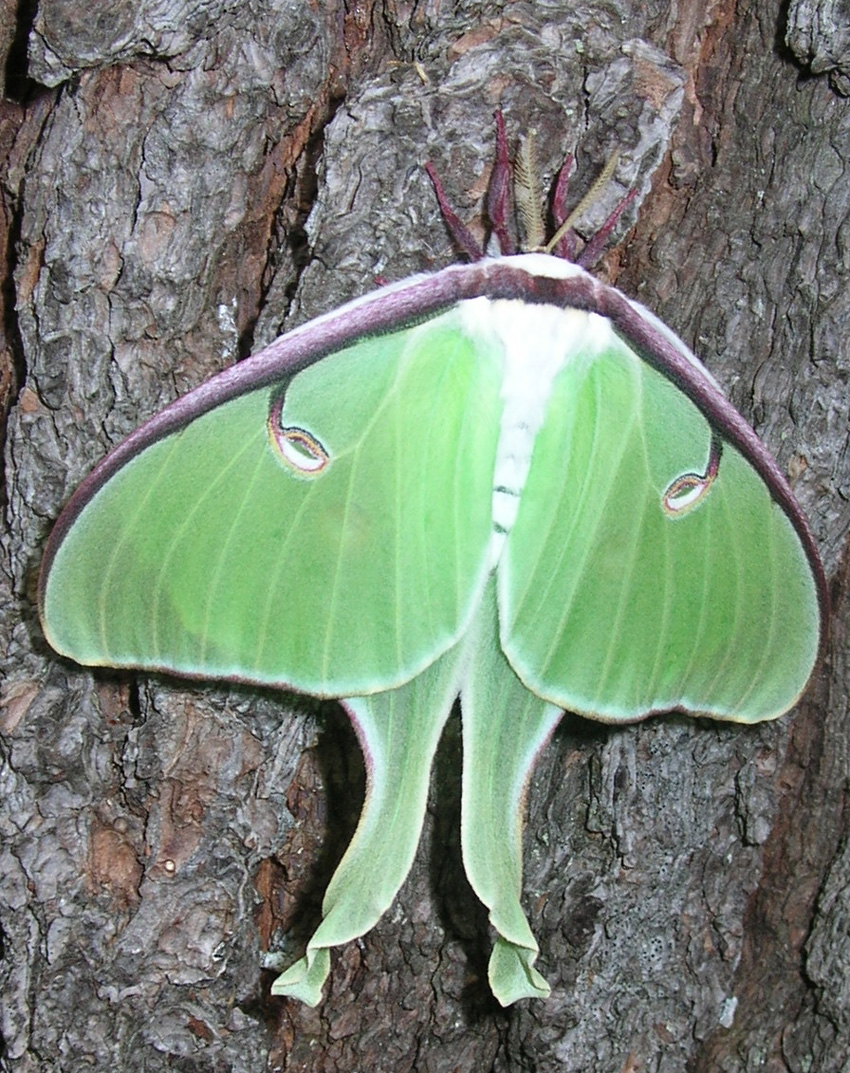
The legs are an interesting wine purple-red.
Where Do Luna Moths Over-Winter?
In the northern states and in the provinces, Luna Moths only have one generation of adults per year. The mature caterpillars spin a cocoon wrapped within a leaf. According to the University of Florida website, it is not usually anchored to a twig so when the leaves fall in autumn, the cocoon falls with them. They then stay in this cocoon until the following spring.
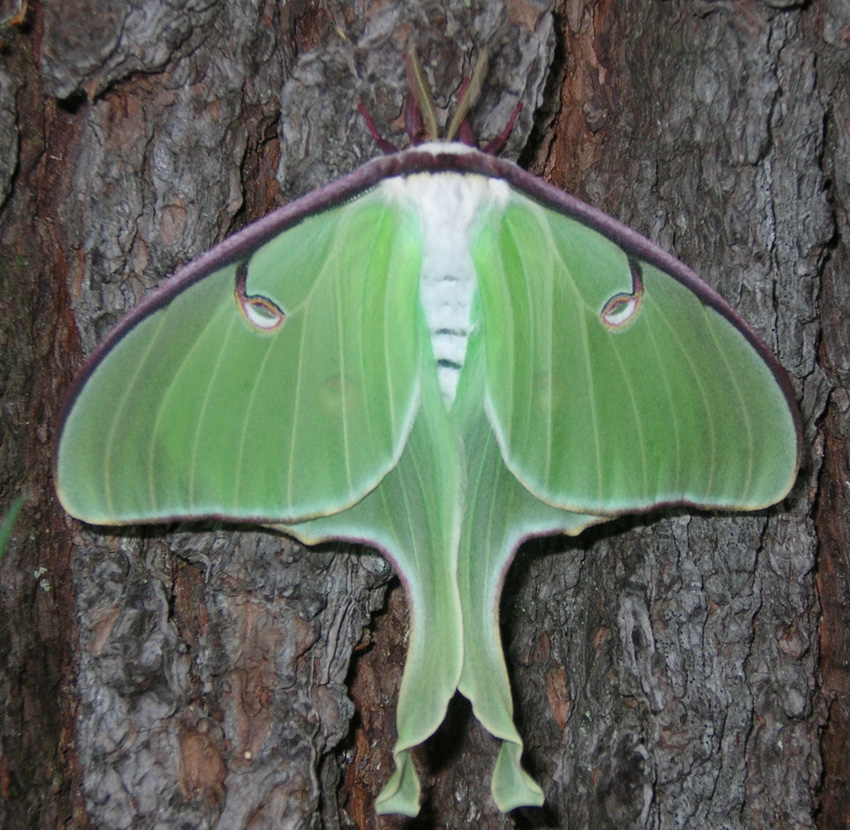
The body of this moth is mostly white.
I hope that there are more Luna Moths sleeping on the forest floor waiting to emerge next spring to be admired!
Related Reading
Join In
Have you seen one of these large pale moths? Please share your sighting with a comment.